Watercolor Haunted Houses for Halloween Review
As a designer who has spent years translating digital art into tangible stitched goods, I know that not every machine embroidery design survives the transition from screen to fabric. When I first opened the file for Watercolor Haunted Houses for Halloween, my immediate reaction was curiosity. The concept of blending the soft, bleeding edges of watercolor painting with the rigid structure of thread is a bold move, especially within the Illustrations category. This isn't just another spooky pumpkin or generic ghost; it promises a specific mood—a whimsical, slightly eerie nostalgia that feels perfect for the modern craft market.
The First Stitch: Mood and Visual Personality
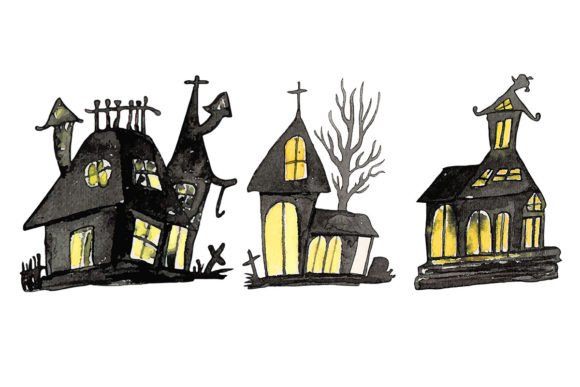
The visual personality of Watercolor Haunted Houses for Halloween is distinct. It captures that classic "spooky cute" aesthetic without veering into horror territory. The shapes are organic, mimicking the way paint spreads on wet paper, which suggests a need for careful stitch planning. In a real-world scenario, I immediately pictured this design on a heavy cotton tote bag or a heavyweight sweatshirt. The layout feels balanced, offering enough negative space to let the "watercolor" effect breathe, but dense enough in the center to hold its ground against background noise.
For an Etsy seller or a boutique owner looking to differentiate their holiday inventory, this design offers a unique selling point. Most Halloween embroidery leans heavily on solid blocks of orange and black with high-contrast outlines. This design, however, relies on texture and gradient simulation. It invites the customer to look closer, noticing how the thread colors blend to create depth rather than just flat shapes. That level of detail can significantly boost the perceived value of a handmade product.
Testing the Design: A Real-World Case Study
To truly understand the potential of Watercolor Haunted Houses for Halloween, I mentally walked through a project for a local craft fair. Imagine preparing a custom embroidered patch for a limited-run collection of denim jackets. The goal is to create a statement piece that stands out in a sea of mass-produced holiday gear. When I visualize the stitching process, the fill stitch patterns become critical. To achieve that watercolor look, the design likely utilizes varying densities and perhaps some running stitch accents to mimic brush strokes.
If I were using this as a tote bag design, I would place it centrally on the front panel. The organic nature of the haunted houses means it won't look awkward if the fabric shifts slightly during hooping. However, the success of the finished product hinges on the thread colors. You cannot simply use standard palette matches. You would need to select threads that allow for subtle tonal shifts—perhaps a slate blue fading into a deep purple, or a moss green bleeding into a teal. If the color transitions are too abrupt, the watercolor illusion breaks, and you are left with a blocky, pixelated image.
Performance on Different Fabrics
While the design looks promising, practical application requires caution regarding fabric choice. Watercolor Haunted Houses for Halloween performs best on stable, medium-to-heavyweight fabrics. On a thin t-shirt, the intricate details might show through to the back, ruining the clean finish. Conversely, on a textured fabric like canvas or a knit sweater, the "bleeding" effect of the watercolor style can actually be enhanced by the fabric's own texture, adding to the artistic feel.
I would be hesitant to use this design on highly stretchy materials unless a robust stabilizer is employed. The delicate lines that define the windows and roof peaks of the haunted houses could distort if the fabric stretches during stitching. For custom apparel like sweatshirts, a tear-away stabilizer usually suffices, but for something more delicate like a baby onesie or a silk pillow cover, a cut-away stabilizer is non-negotiable to maintain the integrity of the design after washing.
Where Caution Is Required
Not every project is suitable for every design. There are specific scenarios where Watercolor Haunted Houses for Halloween might struggle. Small hoop sizes are a major concern. If you attempt to shrink this design to fit a 4x4 inch hoop, the fine details of the watercolor gradients will likely get lost, resulting in a muddy mess of thread. Always check the recommended hoop size before committing to a project.
Additionally, dark fabrics present a challenge. While many designs look great on black, a watercolor effect often relies on lighter tones to show the "wet" look. Stitching light blues and greens over black fabric can result in poor visibility unless you use a significant amount of underlay or a top-stitch technique that ensures opacity. If you are creating a holiday gift on a dark garment, test the contrast first. You don't want the customer to receive a personalized item where the design is barely visible.
Another area of caution is the embroidered patch application. If you plan to sell these as standalone patches, the backing must be sturdy. The intricate details mean there are many small stitch areas that could snag if the backing is too flimsy. Furthermore, products that require frequent washing, like kitchen towels or aprons, need a design with high durability. While the aesthetic is beautiful, ensure the stitch density is sufficient to prevent unraveling over time.
Maximizing Value and Professionalism
For the creative entrepreneur, the true value of Watercolor Haunted Houses for Halloween lies in its ability to elevate brand consistency. Using a unique, artistic design sets your shop apart from competitors relying on clip-art-style graphics. It signals to the buyer that you care about quality and aesthetics. This builds customer trust and encourages repeat business.
When creating printable mockups for your online store, take advantage of the design's artistic nature. Show it on a variety of backgrounds to demonstrate versatility. A digital product preview that shows the design on a cream-colored tote, a navy hoodie, and a white pillow cover tells the customer exactly what to expect. This transparency reduces return rates and increases engagement.
Practical Designer Notes for Success
Before you finalize any order or listing, follow these steps to ensure the best outcome:
- Test on Scrap Fabric: Never skip the test run. Stitch the design on a scrap piece of the exact fabric you intend to use. Check for puckering, registration issues, and color accuracy.
- Check Thread Contrast: Ensure the thread colors pop against the fabric. If the design relies on subtle gradients, make sure they are distinguishable.
- Review Stitch Density: Look at the digitized file closely. Areas that are too dense can cause fabric distortion, while areas that are too sparse may not cover the background adequately.
- Confirm Licensing: As a professional, always verify the licensing terms. Can you sell the finished product? Can you resell the digital embroidery file? Understanding these boundaries protects your business.
- Use Proper Stabilizer: Invest in good quality stabilizers. They are the foundation of a professional-looking embroidery project.
In conclusion, Watercolor Haunted Houses for Halloween is a standout asset for designers willing to put in the extra effort to match the right materials and settings. It transforms a simple Halloween decoration into a piece of wearable art. Whether you are making a personalized gift for a friend or stocking up inventory for your small shop product line, this design offers a fresh, sophisticated take on the holiday theme. Just remember to respect the intricacies of the design, choose your fabrics wisely, and always test before you commit. With the right approach, this machine embroidery design can become a signature item in your seasonal collection.